Oilton water tanks
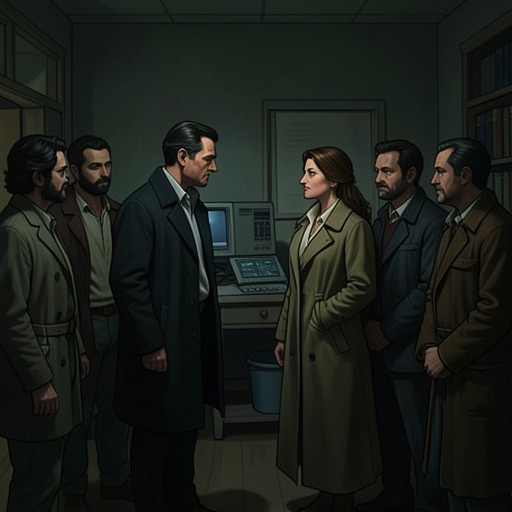
The Legend of William OhOilton water tanks are far more than a source of water in Oilton: they are immense industrial reservoirs, a hidden sleeping place for the Tangled, and the pressure point through which Will, Loth, Carrie, Grak, and their kobold allies turn the city’s own infrastructure against it. Their discovery exposes both the scale of Oilton’s engineering and the deliberate mechanism behind its catastrophe.
Structure and Function
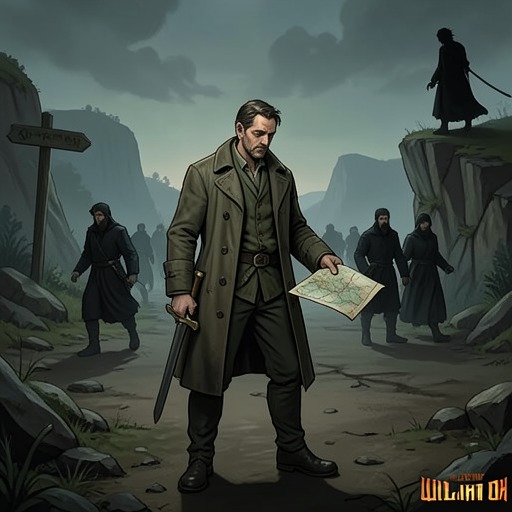
The tanks appear deceptively modest from a distance. Grak points out a pair of squat, round buildings, but Will soon learns that their visible structures conceal reservoirs extending underground. Loth explains that they must be built this way because the system was designed to retain enough water to last a week after everyone responsible for supplying it had died. The tanks therefore preserve the city’s past labor and organization even after its human population has disappeared.
Their actual scale is startling. When Will reaches one of the buildings, he discovers that it is taller than everything around it, and that its water volume is comparable to a massive lake. The tanks combine a low, misleading exterior profile with a vast hidden capacity, making them a fitting emblem of Oilton itself: a city whose critical systems are larger, older, and more dangerous than a casual observer can see.
The Tangled Shelter
The water tanks serve as the Tangled’s nighttime refuge. Loth’s planning depends on exploiting that routine, since the group can attack the tanks early in the morning before the creatures have dispersed. The tanks are surrounded by steel cages disguised as merchant wagons. Their canvas coverings have been stripped away, leaving open steel doors facing the reservoirs, and Will recognizes that the cages were almost certainly used to transport Tangled into Oilton.
That arrangement changes the tanks from neutral infrastructure into evidence. The Tangled did not simply wander into the city by chance, nor did they cage and transport themselves. The emptied wagons indicate that an outside force deliberately introduced them, apparently to doom Oilton while concealing the theft of a single Relic. The tanks thus preserve the physical trace of a wider crime even as they become the setting for the city’s destruction.
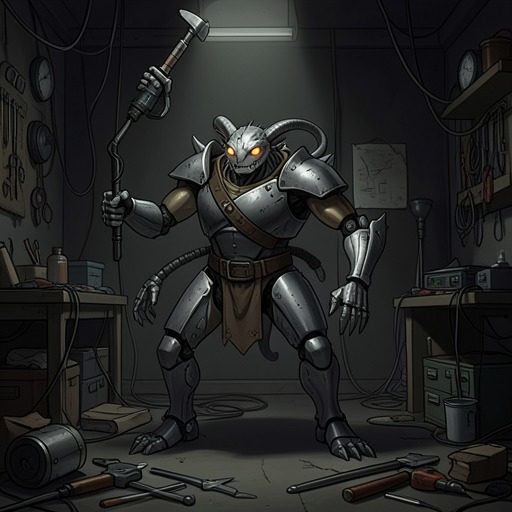
Inside, Will finds three Tangled apparently asleep. One is bound to the floor in restraints and forced into a painful position, and the sight reveals the hidden biological arrangement behind the swarm. The captive is human: the Tangled are the product of an Ability, and they sleep in the tanks because their Originator is there. The reservoirs consequently function as both monster den and prison, enclosing the source of the multiplying threat within the same architecture that sustains the city.
The revelation is reinforced when Will and Carrie witness a Tangled collapse and writhe in pain before a head and torso bud from its body, producing a second creature within seconds. Loth immediately connects this reproduction to the swarm’s identical appearance and rapid growth. The water tanks are therefore not merely associated with a large population; they are part of the environment in which the consequences of the Originator’s Ability become visible and strategically exploitable.
Sabotage and Destruction
The tanks become the central target of the countermeasure against Oilton’s Tangled infestation. After planning, the group assigns Travis to lure the Fire Mote Swarm while Will, Loth, Carrie, and their raiding party descend toward the tanks and prepare explosives below them. The choice is calculated around the creatures’ sleeping habits: the tanks are where the Tangled gather at night, so damaging them can produce a concentrated strike rather than a scattered pursuit.
Loth’s method uses the tanks’ own thermal and hydraulic properties. He reasons that restricting the flow will allow natural heat to build again, raising the pressure, after which the stored water can be released at once as an explosion of steam. He asks for fireproof rope and examines wire and springs from his satchel, treating the reservoir not as an inert container but as a pressure system that can be reconfigured into a weapon.
The operation also intersects with the city’s oil network. By the time a light blinks atop the water tower, Will sees steam pouring from the engines and observes that the pressure in the oil lines is gradually increasing. About half an hour later, while Will and Loth are discussing Build strategy, Oilton explodes. The immediate detonation begins at the castle, where an over-pressured main line ruptures beneath the structure and sends burning oil through it. The castle shatters, flaming rock flies outward, and a fireball rises above the mountain; the heat reaches the observers at the tanks.
Narrative Significance
The Oilton water tanks embody the book’s recurring contrast between ordinary utility and latent force. Water is preserved there for survival, yet the same stored volume becomes an instrument of annihilation once its controls are restricted and its pressure redirected. Their apparent smallness gives way to lake-like magnitude; their civic purpose gives way to a battlefield role; and their walls conceal both a human Originator and the machinery of a city-wide disaster.
They also make causality tangible. The Tangled population has risen from just below nine thousand to thirteen thousand in three days, with Loth calculating a daily growth rate of 14.28 percent. Against that accelerating threat, the tanks provide a fixed point where an expanding swarm, a hidden captor, abandoned transport cages, water pressure, steam, and Oilton’s oil lines converge. The resulting explosion is not an arbitrary catastrophe but a cascade in which infrastructure, monsters, and human planning become inseparable. The tanks are the place where Oilton’s concealed systems finally become visible—and where those systems are forced to destroy the city they were built to preserve.